









































A man and a woman in business attire smile in front of a laptop, sitting on the grass

Sustainability Report & ESG Strategy

Turn sustainability into value for your business

MOVESION supports companies and organizations in building ESG strategies, reporting systems and disclosure processes that turn data, impacts, risks and opportunities into concrete decisions.

Talk to an expert
400+ Companies
50k+ Employees

Expectations of companies are changing fast

Clients, investors, financial institutions and stakeholders expect ever clearer, more credible ESG strategies from companies.

Sustainability has become central to investment decisions, business relationships, access to finance and value chain management.
It is no longer just something to communicate. It must be measured, built into company strategy and backed by reliable data.

A woman holding a coffee cup and a man in a shirt smile outdoors in front of a glass building

What happens without expert support:

  • Difficulty communicating and proving sustainability performance with dedicated reports

  • Complexity in integrating ESG goals into governance and decision-making

  • Complexity in building a solid, credible ESG strategy for clients, investors, financial institutions, business partners and stakeholders


A professional in a suit points at a printed document, a colleague with glasses beside her, office buildings behind

Why develop an ESG strategy and a reporting system?

Strategy and reporting go hand in hand. The ESG strategy gives direction and perspective to the company’s sustainability journey. Reporting makes data, progress and results visible and credible. Together, they help the company build sustainability into decision-making and strengthen its position.

An effective ESG strategy and reporting system let you:

  • Identify the ESG topics that matter most to the company and its stakeholders

  • Understand and manage sustainability impacts, risks and opportunities

  • Define action plans aligned with the business

  • Communicate ESG performance and progress transparently

  • Strengthen reputation, credibility and market trust

  • Improve dialogue with clients, investors, financial institutions and stakeholders

  • Build sustainability into decision-making and corporate governance

New regulation is coming in 2027

The CSRD Directive (2022/2464), transposed into Italian law by Legislative Decree 125/2024, sets out the new sustainability reporting obligations and rules and the related ESRS standards.

Sustainability Report mandatory for:

Companies and SMEs with more than 1,000 employees and €450 million in annual net turnover.

The requirement applies to financial years starting from January 1, 2027, with first publication expected in 2028, under the ESRS standards set by the CSRD.

Sustainability Report not mandatory for:

Companies and SMEs below 1,000 employees and €450 million in annual net turnover.

Even if it is not mandatory, it will still closely affect several types of business:

  • Companies with 500–999 employees or €50–450 million in turnover

    They are outside the legal scope but are often already facing ESG requests from clients or banks.

  • Listed SMEs

    They can voluntarily adopt the simplified VSME standards, often expected by the listing market.

  • Unlisted SMEs

    Indirectly involved along the supply chain

MOVESION services

How can we support your company?

We support companies and organizations at every stage, building tailored solutions based on their goals, industry and ESG maturity.

  1. Double Materiality Assessment

    We identify priority ESG topics and the impacts, risks and opportunities that matter to the company and its stakeholders.

  2. ESG Gap Analysis and Action Plan

    We identify areas for improvement and define concrete actions on the topics that really affect the company.

  3. ESG Strategy

    We set goals, priorities, KPIs and roadmaps aligned with the business model.

  4. Sustainability Reporting and Sustainability Report

    We support structuring ESG data, collection processes, performance monitoring and drafting the Report.

  5. International frameworks

    We support the company in adopting the main reporting frameworks, including GRI, ESRS, ISSB, IFRS Sustainability Disclosure Standards, TNFD, the SDGs and the UN Global Compact.

  6. ESG governance and stakeholder engagement

    We help build sustainability into decision-making and strengthen dialogue with stakeholders.

  7. Continuous improvement

    We turn strategy and reporting into tools for growth, risk management and value creation.

  8. Emissions Offsetting

    Selecting certified offset projects (Gold Standard, Verra VCS) consistent with the company’s climate strategy, and defining a plan to neutralize residual emissions.

SUSTAINABILITY REPORT

How does it work?

Every project starts from the company’s real context: industry, strategic goals, ESG maturity, stakeholder expectations and the quality of available data.
An integrated approach turns sustainability into a concrete tool for governance, innovation and growth.

  1. CONTEXT ANALYSIS

    We assess the goals, priorities, stakeholders and reporting requirements relevant to the organization.

  2. DOUBLE MATERIALITY

    We identify the most significant ESG topics, analyzing impacts, risks and opportunities.

  3. STRATEGY AND GOVERNANCE

    We define goals, KPIs, roadmaps and processes to build sustainability into company decisions.

  4. REPORTING AND MONITORING

    We support the collection, validation and management of ESG data, building reliable, repeatable reporting systems.

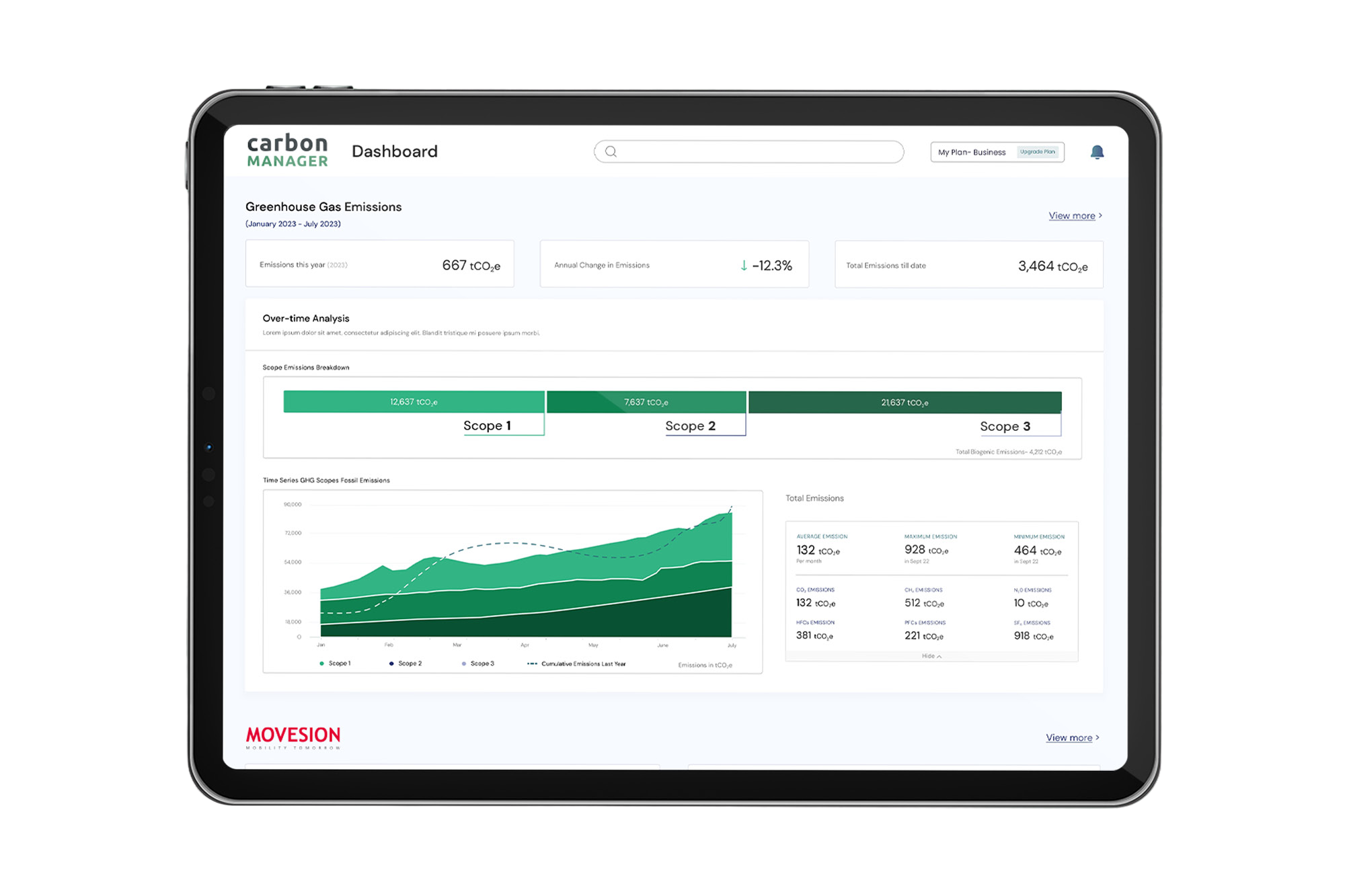
Carbon Manager

The digital platform for ESG data, reporting and strategy

MOVESION combines consulting with Carbon Manager, its proprietary platform for tracking and monitoring climate data over time, making it easier to build reports aligned with the company’s strategic goals.

  • Control of climate data
  • Monitoring decarbonization targets
  • Ongoing management of environmental information
Discover Carbon Manager

Let’s build a tailored ESG program together

Every organization faces different challenges and goals.
That’s why we always start with an initial conversation to understand the company’s context, ESG maturity and strategic and reporting needs.

Request information

Frequently asked questions

The most common questions about ESG Strategy and Sustainability Reporting

What is the difference between ESG strategy and ESG reporting?

ESG strategy defines goals, priorities and actions. ESG reporting organizes and communicates data, performance and progress transparently.

What is a Double Materiality Assessment for?

It identifies the most relevant ESG topics, considering both the company’s outward impacts and the risks and opportunities that can affect the business.

Which frameworks can be considered?

The program can include frameworks such as GRI, ESRS, ISSB, IFRS Sustainability Disclosure Standards, TNFD, the SDGs and the UN Global Compact.

What are the deadlines for submitting the Sustainability Report?

Sustainability reporting is annual and is attached to the management report. Actual deadlines vary by company size: always check the up-to-date start date that applies to your case, as the regulation is under review.

If the new thresholds are not yet transposed, what applies in Italy today?

Until the new directive is transposed, the scope set by Legislative Decree 125/2024 formally remains in force. We still recommend monitoring transposition, as the thresholds that apply to your company may change in the coming months.

Are the thresholds of 1,000 employees and €450 million in turnover already law in Italy?

No, not yet. The new thresholds come from Directive (EU) 2026/470 (“Omnibus I”), approved at EU level and in force since March 18, 2026, but Italy has yet to transpose it into national law by March 19, 2027.

What happens if my company doesn’t meet CSRD obligations?

Failing to meet reporting obligations exposes the company to administrative penalties, with direct liability for directors and oversight by CONSOB. On top of that come indirect risks, such as exclusion from calls and funding tied to ESG criteria and a negative impact on ESG ratings and access to credit.

Who checks compliance with sustainability reporting obligations?

Oversight of CSRD compliance lies with CONSOB, with directors also directly liable in case of non-compliance.

Could my company face consequences even if it is not directly subject to the CSRD?

Yes, indirectly. Companies that are not required to report can still feel practical effects, such as requests for ESG data from clients, banks or supply chain partners, so it is wise to prepare even without a direct obligation.

Can’t find the answer you were looking for?

Write to us at [email protected] and we'll answer all your questions.

Explore all Sustainability areas

Why choose us?

  • Continuous improvement

    We help companies use ratings and certifications as tools for growth, not static documents.

  • Pragmatic approach

    We turn requirements and standards into concrete, manageable actions.

  • Business focus

    We build programs aligned with your industry, business goals and supply chain requirements

  • Integrated ESG expertise

    We bring together sustainability, environmental analysis, management systems, reporting and data collection

Certifications and ESG ratings shouldn’t be mere formalities. With MOVESION they become tools to better understand your organization, improve processes and strengthen dialogue with the market, supply chains and stakeholders.

Request information

One platform for:

  • ESG ratings
  • Environmental analysis
  • Sustainability reporting
  • Certifications
  • Stakeholder engagement